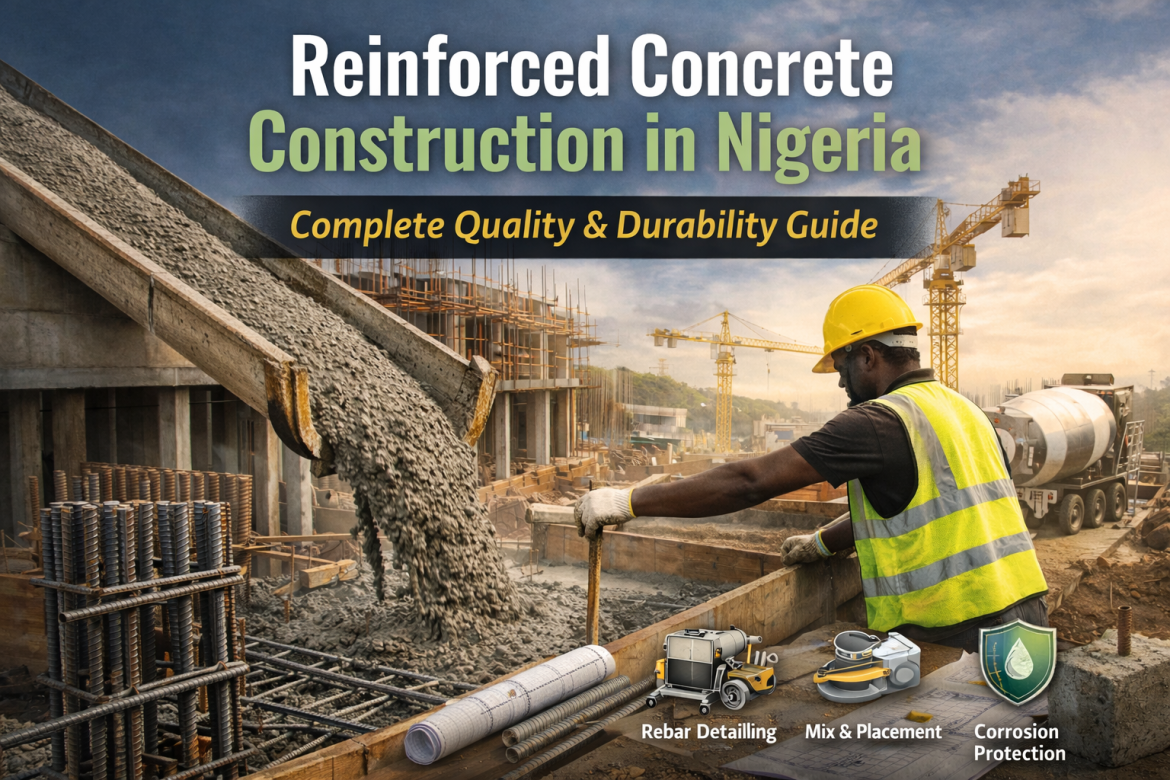
Reinforced concrete is the “backbone” of most modern buildings in Nigeria—foundations, columns, beams, slabs, staircases, retaining walls, tanks, culverts, and more. Yet it is also the part of construction where small shortcuts create the biggest regrets: cracks that keep widening, dampness that never truly goes away, rust stains from corroding steel, sagging slabs, repairs that cost more than doing it right the first time, and in extreme cases, structural distress. At Conifer Konstruktion, we treat reinforced concrete as a system—not just cement + sand + granite + iron rods. When the system is executed correctly (design, materials, workmanship, curing, and protection working together), you get what every project owner wants: strength, durability, predictable timelines, and peace of mind—the true definition of Stress-Free Construction. Important note: This article is educational and general. It is not a substitute for structural design or professional supervision. Always engage qualified built-environment professionals and follow approved drawings/specifications for your specific project and exposure conditions. Concrete is excellent in compression (it resists being crushed) but weak in tension (it does not like being pulled or bent). Steel reinforcement (rebar) is excellent in tension. Reinforced concrete works because concrete and steel are combined so that: Concrete carries compression and protects steel, and Steel carries tension and controls cracking, while Proper detailing ensures both materials act together as one unit. If any link in that chain fails—wrong steel size, poor cover, over-watering, inadequate vibration, weak curing, or aggressive exposure—the “reinforced” part stops working as intended. Nigeria’s construction environment has realities that punish careless concrete work: Material variability: sand, granite, and even water quality differ widely from one location to another. Heat and drying winds (especially Harmattan): concrete loses water quickly, increasing shrinkage cracking if curing is poor. Rainy season disruptions: rain can wash cement paste away, weaken surface layers, and create cold joints if pours are not planned. Coastal/industrial exposure: chlorides and aggressive environments speed up steel corrosion when cover or concrete quality is poor. Market risks: substandard cement storage, contaminated sand, questionable rebar, and “mix ratio guesswork.” Workmanship shortcuts: adding water to make placement “easier,” under-vibration, removing formwork too early, or ignoring detailing. The good news: these issues are manageable—if you build a quality system and enforce it. Think of quality reinforced concrete like a five-legged stool. Remove one leg and durability collapses. Quality begins on paper: correct member sizing, reinforcement detailing, bar spacing, lapping, anchorage, cover, and load paths. Cement, aggregates, water, reinforcement, and admixtures must be consistent and suitable. Your target strength is not achieved by “1:2:4 by eye.” It is achieved by controlled batching (and preferably mix design where appropriate), correct water-cement ratio, and adequate mixing time. Concrete must be placed without segregation, compacted properly (typically by vibration), and protected from disturbance. Curing is not optional—it is where strength and durability are “locked in.” Protection includes cover, waterproofing strategy where necessary, and good drainage detailing. Cement must be fresh and stored properly—dry, elevated, and protected from moisture. Even good cement becomes unreliable if it cakes, absorbs moisture, or is stored carelessly for too long. Best practice: Store on pallets, not on bare floor. Protect from rain and ground moisture. Use “first in, first out” stock rotation. Many durability problems begin with dirty sand: clay, silt, organic matter, and salts reduce bond and increase shrinkage and cracking. Practical checks: Ensure sand is clean and well-graded. Avoid sand with excessive fines or organic contamination. If in doubt, insist on basic field/lab checks rather than assumptions. Correct aggregate size and grading helps strength, workability, and reduces cement demand. Dirty aggregate introduces weak planes and reduces bond. Water quality affects setting, long-term durability, and steel corrosion risk. Avoid water with salts, oils, or unknown contaminants. Rebar quality is not just “it looks like iron.” What matters is grade, ductility, diameter accuracy, and condition. What proper handling looks like: Store off the ground to reduce rusting and contamination. Keep bars straight and clean; remove thick scale, mud, oil, and paint. Cut and bend correctly—avoid “burning” bars with damaging heat for convenience. One of the most damaging practices is changing rebar sizes “to what is available.” Structural design depends on bar size, spacing, and placement. If there is a supply issue, the engineer must approve any change. Cover is the concrete thickness protecting the steel from air, moisture, and aggressive chemicals. Inadequate cover is a direct pathway to corrosion. Rule: cover depends on exposure and member type—follow drawings/specifications, and ensure cover is actually achieved on site (with proper spacers/chairs). Incorrect lap length, poor positioning of laps, and weak anchorage can cause cracking, excessive deflection, and long-term distress. It is not enough to “overlap something.” It must be as detailed by the engineer and correctly tied, located, and cast. Over-congested reinforcement zones lead to honeycombing and voids (especially at beam-column joints). Good detailing anticipates placement reality. Good workmanship uses correct vibration and sequencing. Formwork is not just a mould—it is a temporary structure that must: resist wet concrete pressure, hold line/level/plumb, prevent leakage of cement slurry, and remain stable until concrete gains sufficient strength. Common Nigerian pitfalls include weak propping, poor alignment, and early stripping (removing formwork too soon). Those choices often show up later as sagging slabs, cracks, uneven soffits, and repairs. A quality formwork system includes: correct supports/bracing, tight joints to reduce slurry loss, release agents applied correctly (not engine oil splashed everywhere), and inspection before every pour. People often ask, “What is the best mix ratio?” The better question is: What strength and durability does this element require? Foundations, suspended slabs, columns, water-retaining structures, and exposed external members do not all have the same performance needs. Adding excess water makes concrete easier to place, but it reduces strength and increases permeability—meaning water and aggressive agents enter the concrete more easily, accelerating steel corrosion. If you remember only one thing, remember this: Accurate batching (measured quantities) produces consistent concrete. “By eye” batching produces unpredictable strength and uneven durability. Ready-mix can improve consistency when the supplier is reputable and logistics are managed. Site-mix can work when there is strict supervision, correct batching, and disciplined curing. The best choice is the one that delivers repeatable quality for your project environment. Concrete pours must be planned to avoid cold joints—weak planes formed when fresh concrete is placed against concrete that has already begun to set. Under-vibration causes honeycombing and voids. Over-vibration can cause segregation. Skilled execution matters: correct vibrator insertion, spacing, and duration. Dropping concrete from excessive height, pushing it too far, or using overly wet mixes causes segregation—coarse aggregate separates from paste, reducing uniformity and strength. Curing keeps concrete moist and at a suitable temperature so cement hydration continues and strength develops properly. Nigeria’s heat and drying winds can pull moisture out of concrete too quickly, leading to: plastic shrinkage cracks, surface dusting, lower strength, and higher permeability (which invites corrosion). Practical curing methods that work in Nigeria: continuous water curing (ponding, sprinkling, wet coverings), curing compounds (when properly applied), protective coverings that reduce evaporation, and disciplined curing schedules aligned with weather and element type. Key mindset: curing is not “watering sometimes.” It is a controlled process. Corrosion expands steel volume, cracks concrete, and accelerates deterioration. Corrosion risk rises when concrete is porous, cover is inadequate, or exposure is aggressive. Your best defenses: quality concrete + correct cover + crack control + good drainage + correct waterproofing where necessary. Over time, carbon dioxide and chlorides can penetrate concrete—especially if concrete is permeable. Coastal areas and environments with chloride exposure require stricter durability discipline. In certain soils and water conditions, sulphates can react with cement hydration products and damage concrete. This is managed through proper specification and material selection—not guesswork. Water is not just a “finishing problem.” It is a durability problem. Poor detailing around bathrooms, balconies, parapets, roof slabs, and retaining walls is a common cause of recurring leaks and long-term corrosion. Not all cracks mean imminent collapse, but all cracks deserve attention because cracks can: expose steel to moisture and air, allow water ingress and dampness, signal movement, settlement, or detailing defects. Plastic shrinkage cracks: early age, often from rapid drying. Drying shrinkage cracks: from moisture loss over time. Thermal cracks: from temperature variation, especially in large pours. Structural cracks: may indicate overloading, inadequate reinforcement, poor detailing, or support movement. The correct response is not panic—it is professional diagnosis, then targeted repair and prevention. If you want durable reinforced concrete, insist on a quality process—not inspirational promises. Before pouring, confirm: correct bar sizes and spacing, correct cover spacers/chairs, reinforcement tied securely, clean formwork (no debris), openings and embeds placed correctly, formwork braced and aligned, pour sequence and vibration plan agreed, weather protection plan ready (rain/heat). Depending on project scale, checks may include: workability control (e.g., consistency testing), temperature awareness (especially in hot weather), batching records and delivery timing (for ready-mix). For many serious projects, compressive strength verification via cube/cylinder testing and proper record-keeping is part of a credible QA process. A stress-free project is documented: pour cards / pour records, reinforcement inspection sign-offs, curing logs, test results, site diary entries, non-conformance and corrective action tracking where needed. Documentation is not bureaucracy—it is protection. Consequence: lower strength, higher permeability, faster corrosion, more cracks. Consequence: honeycombing, voids, exposed rebar, weak zones. Consequence: cracks, dusty surfaces, reduced strength, water ingress. Consequence: excessive deflection, cracking, long-term structural distress. Consequence: sagging, cracking, poor surface integrity, repairs. Consequence: permanent dampness, corrosion, peeling finishes, mould issues. If you are a project owner—especially a diaspora client—these are the practical questions that keep you safe: Who is responsible for structural design and supervision, and are they properly qualified? Do we have a clear reinforcement schedule and pour sequence plan? Are materials controlled (cement storage, aggregate quality, steel verification)? Is batching measured and repeatable (not “by eye”)? What is the curing plan (method + duration + accountability)? What tests/records will be kept to prove quality? Who signs off pre-pour inspections and holds the team accountable? What is the waterproofing and drainage strategy for wet areas and exposed slabs? How are changes handled (variation process and approvals)? How will I receive updates—photos, logs, test results, and progress reports? These questions reduce headaches, disputes, and “surprises.” At Conifer Konstruktion, reinforced concrete quality is protected by process—before, during, and after the pour: soil and site reality reviewed, structural intent understood, method statement prepared (how the work will be executed), procurement plan aligned (materials, steel, formwork, labour). reinforcement inspection and sign-off before pouring, disciplined batching and workability control, correct placement and compaction practices, weather-aware pour planning (rain/heat control). curing is planned, supervised, and recorded, waterproofing and drainage are integrated—not patched later, crack-risk zones are treated with care (joints, detailing, sequencing). We build trust through evidence: site records, inspection logs, progress updates, and a structured communication routine—especially valuable for remote project owners. That is how we protect your investment and deliver quality that lasts. It is the most common and versatile option, but the “best” system depends on project type, cost, speed, and design requirements. The right decision is made with professionals. Cracks can result from shrinkage, curing issues, detailing problems, movement, or poor workmanship. Not every crack is structural, but every crack should be assessed. Yes—if batching is measured, materials are sound, mixing is adequate, placement is correct, and curing is disciplined. Many failures come from inconsistency and shortcuts, not the mere fact of manual mixing. A combination of low permeability concrete (controlled water content and good compaction) plus proper curing. That is the durability foundation. Correct cover, quality concrete, controlled cracking, good drainage/waterproofing where necessary, and avoiding porous/over-watered mixes. If you want a building that stays strong and beautiful in Nigeria’s conditions, treat reinforced concrete as a quality system—not a routine activity. Good reinforced concrete is quiet: it does not constantly demand repairs, rework, excuses, or emergency spending. It simply performs. And that is the goal: Complete quality, real durability, and a stress-free construction journey. Reinforced Concrete Construction in Nigeria: Complete Quality & Durability Guide
What Reinforced Concrete Really Means (in practical terms)
Why Reinforced Concrete Quality Fails So Often in Nigeria
The 5 Pillars of Durable Reinforced Concrete
1) Correct structural design and detailing
2) Sound materials
3) Proper batching and mixing
4) Correct placement and compaction
5) Curing and protection
Materials: What to Watch Before You Pour Anything
A. Cement (and storage discipline)
B. Fine aggregate (sand): cleanliness matters more than people think
C. Coarse aggregate (granite): size + grading + cleanliness
D. Water: “clean enough to drink” is a good rule of thumb
E. Reinforcement steel: quality, diameter accuracy, and storage
Reinforcement Detailing That Protects Your Building for Decades
1) Correct bar sizes and spacing (no substitutions on site)
2) Cover: your first line of defense against corrosion
3) Laps and anchorage: where many failures start quietly
4) Congestion control: concrete must be able to flow and compact
Formwork and Falsework: The Hidden Structure That Shapes the Real One
Concrete Production in Nigeria: Getting the Mix Right (without guesswork)
1) Stop chasing “mix ratio” and start chasing “target performance”
2) Water-cement ratio is everything (and over-watering is the silent killer)
Concrete that is “too wet” is often concrete that will age badly.3) Batching control: consistency beats “heroic labour”
4) Ready-mix vs site-mix: choose based on control, not ego
Placement and Compaction: Where Strength is Won or Lost
A. Pour planning (sequence and continuity)
B. Vibration (proper compaction)
C. Avoid segregation
Curing in Nigeria: The Most Ignored Step (and the most important for durability)
Durability Threats You Must Design and Build Against (Nigeria context)
1) Steel corrosion (the biggest long-term enemy)
2) Carbonation and chloride ingress
3) Sulphate attack (soil/water conditions)
4) Water penetration and dampness
Cracks in Reinforced Concrete: What is “Normal” and What is Not?
Common crack categories (simple interpretation)
Quality Control: What Serious Reinforced Concrete Work Looks Like
1) Pre-pour inspection checklist (must happen every time)
2) Fresh concrete checks
3) Strength verification (when required)
4) Documentation (the “stress-free proof”)
The Most Common Reinforced Concrete Mistakes in Nigeria (and their real consequences)
Mistake 1: Adding water to “help the concrete flow”
Mistake 2: Weak compaction or no vibration
Mistake 3: Poor curing
Mistake 4: Wrong rebar placement or substitutions
Mistake 5: Early formwork removal
Mistake 6: Treating waterproofing and drainage as “afterthought”
Client Checklist: How to Protect Yourself (Even If You’re Not an Engineer)
Conifer’s Quality-First Method for Reinforced Concrete (How we keep it Stress-Free)
1) Pre-construction clarity
2) Controlled execution
3) Curing discipline and durability detailing
4) Documentation and client confidence
FAQs: Reinforced Concrete Construction in Nigeria
1) Is reinforced concrete always the best structural option?
2) Why do I see cracks even on “new” Nigerian buildings?
3) Can I build strong concrete with manual mixing?
4) What is the single biggest factor that improves durability?
5) How do I prevent rebar corrosion?
Conclusion: Durable Reinforced Concrete is Not Luck—It’s Method
 Conifer Konstruktion (Nig) Ltd has a project delivery track record of 60+ projects. Contact us via email (okoyeebubedike@coniferkonstruktion.com.ng) or phone (803) 404-0894, and we’ll make sure you’ll have a stress free construction experience.

1 Comment
-
You’re doing a fantastic job with this blog.

